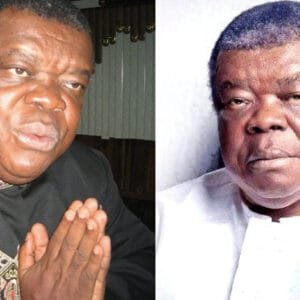
Wole Soyinka biography reveals the life of Africa’s first Nobel Prize winner in Literature. Discover his age, wife Folake Doherty, children, net worth, awards, books, family history, and legacy.
Wole Soyinka is an extraordinary story of a man who broke barriers and made history as the first African to win the Nobel Prize in Literature. Born Akinwande Oluwole Babatunde Soyinka on July 13, 1934, in Abeokuta, Nigeria, this legendary playwright, poet, and political activist has spent over six decades shaping African literature and championing justice across the continent.
His journey from a small Anglican mission compound in Western Nigeria to the global stage represents more than personal success. It embodies the voice of a generation that witnessed colonialism’s end, Nigeria’s independence, civil war, military dictatorships, and the ongoing struggle for true democracy. Through his powerful plays, poetry, novels, and essays, Soyinka has consistently challenged tyranny, celebrated African culture, and given voice to the voiceless.
In 1986, he became the first African to receive the Nobel Prize for Literature, a recognition that validated not just his individual brilliance but also the richness of African literary traditions. His works blend Yoruba mythology with contemporary political commentary, creating a unique theatrical language that resonates across cultures and generations.
Today, at 90 years old, Professor Soyinka remains an active voice in Nigerian and African affairs, continuing to write, teach, and speak truth to power with the same passion that has defined his remarkable career.
TOC
- 1 Quick Facts About Wole Soyinka
- 2 Early Life and Family Background: Roots in Yorubaland
- 3 Educational Path and Academic Excellence
- 4 Literary Career and Major Works: A Revolutionary Voice
- 5 Nobel Prize Achievement: Making History
- 6 Personal Life: Marriages and Children
- 7 Net Worth and Financial Profile: Literary Wealth
- 8 Awards and Recognitions: A Lifetime of Honors
- 9 Political Activism and Imprisonment: Speaking Truth to Power
- 10 Legacy and Global Impact: An Enduring Influence
- 11 Interesting Facts About Wole Soyinka
- 12 Conclusion: A Life Dedicated to Art and Justice
- 13 Frequently Asked Questions (FAQs)
- 13.1 1. How old is Wole Soyinka and is he still alive?
- 13.2 2. Who is Wole Soyinka’s current wife and how many times has he been married?
- 13.3 3. How many children does Wole Soyinka have and what do they do?
- 13.4 4. What is Wole Soyinka’s net worth?
- 13.5 5. What did Wole Soyinka win the Nobel Prize for?
- 13.6 6. What are Wole Soyinka’s most famous books and plays?
- 13.7 7. Was Wole Soyinka really imprisoned and why?
- 13.8 8. Where is Wole Soyinka now and what is he doing?
- 13.9 Share this post:
Quick Facts About Wole Soyinka
| Category | Details |
|---|---|
| Full Name | Akinwande Oluwole Babatunde Soyinka |
| Date of Birth | July 13, 1934 |
| Age | 90 years old (as of 2025) |
| Place of Birth | Abeokuta, Ogun State, Nigeria |
| Nationality | Nigerian |
| Ethnicity | Yoruba |
| Profession | Playwright, Poet, Novelist, Essayist, Professor, Activist |
| Current Position | Arts Professor of Theatre at NYU Abu Dhabi (since 2022) |
| Current Wife | Folake Doherty-Soyinka (married 1989) |
| Previous Wives | Barbara Dixon (1958-divorced), Olaide Idowu (1963-divorced) |
| Children | At least 10 children from three marriages |
| Net Worth | Estimated $5-20 million (varies by source) |
| Nobel Prize | Literature (1986) – First African laureate |
| Education | BA from University of Leeds (1958), Honorary Doctorates from multiple universities |
| Notable Works | Death and the King’s Horseman, The Lion and the Jewel, Aké: The Years of Childhood |
| Awards | Nobel Prize, Commander of the Order of the Federal Republic, Europe Theatre Prize |
Early Life and Family Background: Roots in Yorubaland
Birth and Family Heritage
Wole Soyinka was born into an Anglican Yoruba family in Aké, Abeokuta, a historic city in what is now Ogun State, Nigeria. His birth in 1934 came during the height of British colonial rule, a period that would profoundly influence his later writings and political consciousness.
His father, Samuel Ayodele Soyinka, was a prominent Anglican minister and headmaster at St Peter’s Primary School, giving young Wole access to education and books from an early age. His mother, Grace Eniola Soyinka, who was called “Wild Christian,” was a shopkeeper and local activist, whose fierce independence and political engagement would leave an indelible mark on her son’s worldview.
Growing Up Between Two Worlds
Soyinka was the second of seven children: Atinuke Aina, Femi, Yeside, Omofolabo Ajayi, and Kayode. His sister Folasade died as an infant. Growing up in a large, extended family in the Anglican mission compound, young Wole experienced a unique cultural duality that would later define his literary voice.
As a child, he lived in an Anglican mission compound, learning the Christian teachings of his parents, as well as the Yoruba spiritualism and tribal customs of his grandfather. This exposure to both Western Christianity and traditional Yoruba beliefs created in him a deep appreciation for cultural synthesis rather than cultural conflict.
His mother’s activism particularly influenced him. Known for her fierce advocacy for women’s rights and social justice, Grace Soyinka belonged to the famous Ransome-Kuti family, connecting young Wole to one of Nigeria’s most politically active dynasties. This family connection would prove significant throughout his life.
Childhood Curiosity and Early Promise
A precocious and inquisitive child, Wole prompted the adults in his life to warn one another: “He will kill you with his questions.” This insatiable curiosity and questioning spirit would become hallmarks of his literary and political career, as he challenged conventional wisdom and authoritarian narratives throughout his life.
Educational Path and Academic Excellence
Primary and Secondary Education
Soyinka was educated at St. Peters Primary School, where his father was the headmaster, from 1940 to 1946. The advantage of having an educator father meant access to books and intellectual stimulation beyond what most Nigerian children experienced during the colonial era.
He had his secondary education at Abeokuta Grammar School and university preparatory studies at Government College, Ibadan from 1946 to 1951. Government College Ibadan was one of the most prestigious secondary schools in colonial Nigeria, producing many of the country’s future leaders, intellectuals, and professionals.
University Years in Nigeria
He was admitted into the University College Ibadan, where he studied English literature, Greek, and Western history from 1952 to 1954. These formative years at Ibadan were crucial in several ways. It was here that he wrote his first radio play and began to develop his distinctive literary voice.
During his education, he co-founded the Pyrate Confraternity, an anti-corruption and justice-seeking student organization that would become the first confraternity in Nigeria. This early activism foreshadowed his lifelong commitment to fighting corruption and promoting social justice.
Leeds University and Literary Development
Soyinka left Nigeria for England to study at the University of Leeds. During that period, he was the editor of the university’s magazine, The Eagle, before becoming a full-time author in the 1950s. The move to Leeds in 1954 exposed him to European theatrical traditions, contemporary British drama, and international literary movements.
He graduated with a bachelor’s degree in English literature in 1958. (In 1972 the university awarded him an honorary doctorate). His time in England was transformative, allowing him to study drama intensively and begin writing the plays that would later make him famous.
From 1958 to 1959, Soyinka was a dramaturgist at the Royal Court Theatre in London, one of Britain’s most innovative theatrical venues. This experience gave him practical knowledge of professional theatre production and exposed him to the cutting-edge of contemporary British drama.
Literary Career and Major Works: A Revolutionary Voice
Early Plays and Theatrical Innovation
In the late 1950s Soyinka wrote his first important play, A Dance of the Forests, which satirized the Nigerian political elite. Written for Nigeria’s independence celebrations in 1960, this play daringly refused to romanticize Africa’s pre-colonial past or celebrate independence uncritically, instead warning about the dangers of corruption and authoritarian rule.
He wrote many plays which were performed on radios and in theatres in Nigeria and the UK, especially the Royal Court Theatre. His early theatrical works established him as a bold new voice in African literature, unafraid to challenge both colonial legacies and post-colonial failures.
Satirical Comedies
Soyinka demonstrated remarkable range as a playwright, moving effortlessly between comedy and tragedy. His lighter works include “The Lion and the Jewel,” a delightful comedy that explores tensions between tradition and modernity in a Nigerian village, and “The Trials of Brother Jero,” which satirizes religious charlatanism with devastating wit.
These comedies, while entertaining, never lost sight of serious social commentary. They exposed the pretensions of Westernized elites, the exploitation of religious followers by fraudulent preachers, and the complex negotiations between traditional and modern values in post-colonial Africa.
Serious Political Drama
His more serious plays demonstrate the depth of his philosophical and political engagement. “Death and the King’s Horseman” explores Yoruba concepts of honor, duty, and cosmic order through the tragic story of a colonial intervention in a ritual suicide. The play brilliantly weaves together mythology, history, and contemporary political critique.
“Kongi’s Harvest” and “Madmen and Specialists” offer bitter satirical portraits of African dictatorships, drawing on Soyinka’s firsthand observations of post-independence political failures. These works anticipated many of the crises that would plague African nations in subsequent decades.
Poetry and Prose
Beyond drama, Soyinka has published numerous poetry collections and prose works. His poetry often addresses themes of political oppression, cultural identity, and existential questioning. Collections like “Idanre and Other Poems” and “A Shuttle in the Crypt” showcase his lyrical gifts and philosophical depth.
Soyinka has written two novels, The Interpreters (1965), narratively, a complicated work which has been compared to Joyce’s and Faulkner’s, and “Season of Anomy” (1973). His novels experiment with narrative structure and language, creating complex portraits of Nigerian society.
Memoirs and Autobiographical Works
His autobiographical writings provide intimate insights into his life and times. “Aké: The Years of Childhood” (1981) is a masterful memoir of his early years, while “The Man Died: Prison Notes” (1972) offers a harrowing account of his imprisonment during the Nigerian Civil War. These works combine literary artistry with historical documentation, preserving crucial aspects of Nigerian history.
Recent Works
In 2021, Soyinka published “Chronicles from the Land of the Happiest People on Earth,” his first novel in nearly 50 years. This darkly satirical work offers a scathing critique of contemporary Nigerian corruption and political dysfunction, demonstrating that his creative powers and critical vision remain sharp at 87.
Nobel Prize Achievement: Making History
The Historic 1986 Award
In 1986, upon awarding Soyinka with the Nobel Prize for Literature, the committee said the playwright “in a wide cultural perspective and with poetic overtones fashions the drama of existence.” This recognition made headlines worldwide, as Soyinka became the first African laureate in the prize’s 85-year history at that time.
The Nobel Committee’s citation praised his ability to create works that combined theatrical innovation with profound philosophical and political insight. They recognized how his plays drew on Yoruba mythology while addressing universal human concerns about power, justice, and freedom.
Dedicating the Prize to Mandela
He dedicated his Nobel acceptance speech to Nelson Mandela, who was then still imprisoned in South Africa. This gesture demonstrated Soyinka’s commitment to pan-African solidarity and his refusal to separate artistic achievement from political engagement.
The Nobel Prize transformed Soyinka’s global visibility but didn’t change his fundamental approach to his work or his activism. He continued to write challenging works and speak out against injustice, using his enhanced platform to amplify his message.
Impact on African Literature
Soyinka’s Nobel Prize had profound implications beyond his personal achievement. It validated African literary traditions on the world stage, opened doors for subsequent African writers, and challenged Western literary establishments to take African literature seriously.
The prize also brought greater attention to other African writers and helped establish African literature as a legitimate field of academic study in universities worldwide. In this sense, Soyinka’s achievement benefited an entire generation of African writers who followed him.
Personal Life: Marriages and Children
First Marriage: Barbara Dixon
He married British writer Barbara Dixon in 1958, whom he met during his studies at the University of Leeds. She gave birth to their son Olaokun. People know him as a Nigerian medical doctor. Olaokum was born on November 11, 1958.
Olaokun Soyinka is a Nigerian medical doctor and a former Ogun State commissioner for Health, who has had a distinguished career in medicine and public health. The marriage to Barbara Dixon eventually ended in divorce, though the exact timeline is not publicly documented.
Second Marriage: Olaide Idowu
Olaide Idowu, a Nigerian librarian, in 1963, became his second wife. Together, they made the family expand its boundaries with three daughters (Moremi, Peyibomi, and Iyetade) and a son (Ilemakin).
His children from this marriage have pursued diverse careers. Moremi is known for her work on the position of the Senior Special assistant on Migration and Humanitarian Affairs of the former president Olusegun Obasanjo. People know Peyibomi as a Professor of African and International Politics.
Iyetade was born on June 6, 1965. She got an education at the University Teaching Hospital. During her life, she was a poet and a scientist. However, she left her scientific work in England and studied the theatre. She gave birth to a daughter Oreofe and a son Adeoto. Iyetade died in 2013. Her death was a profound loss for the family.
Current Marriage: Folake Doherty
He has been married to his third wife Folake Doherty since 1989. This marriage has proven to be his longest and most stable, lasting over three decades. Folake Doherty-Soyinka has maintained a relatively private life, supporting her husband’s work while staying out of the public spotlight.
Together they have had children, though the exact number and details of all Soyinka’s children remain somewhat private, reflecting the family’s desire to maintain some boundaries around their personal lives.
Family Life and Privacy
Although Wole Soyinka has always been reticent about discussing his family life, in this volume he makes a particularly touching dedication to his “stoically resigned” children, and to his wife Adefolake, for enduring many years of hardship and dislocation.
His children have had to cope with their father’s frequent absences due to his political activism, including his imprisonment and periods of exile. Despite these challenges, many of his children have pursued accomplished careers in their own right, suggesting that the Soyinka household successfully balanced public service with family obligations.
Net Worth and Financial Profile: Literary Wealth
Estimated Net Worth
Wole Soyinka is one of the widely celebrated playwrights in Nigeria, Africa and the entire world with an estimated net worth of about $5 million dollars. However, other sources provide different estimates, with some suggesting his net worth could be as high as $20 million.
The variation in estimates reflects the difficulty of accurately assessing the wealth of literary figures, particularly those whose primary value lies in intellectual property, speaking fees, and academic positions rather than easily quantifiable assets.
Sources of Income
Literary figures like Soyinka typically derive their income from book sales, speaking engagements, academic positions, and awards. Throughout his career, Soyinka has held prestigious academic appointments at universities in Nigeria, the United States, and other countries, providing stable income streams.
His books continue to sell worldwide, generating royalties from multiple languages and editions. As one of Africa’s most famous writers, he commands substantial fees for speaking engagements, lectures, and public appearances. The Nobel Prize also came with significant prize money, though the primary value was the prestige and increased earning potential it provided.
Academic Positions and Current Role
Since 1 September 2022, Soyinka has held the position of Arts Professor of Theatre at New York University Abu Dhabi. Such prestigious appointments typically come with substantial salaries and benefits, contributing significantly to his financial security in his later years.
Throughout his career, he has held visiting professorships and teaching positions at numerous universities worldwide, including Harvard, Cambridge, and Yale, among others. These positions have provided both income and intellectual stimulation.
Perspective on Wealth
It’s important to note that his primary focus has been on his literary and intellectual pursuits, as well as his political activism, rather than accumulating personal wealth. Soyinka’s financial decisions have consistently prioritized artistic freedom and political principle over financial gain.
His willingness to go into exile, his refusal to compromise his principles for financial reward, and his consistent support for social justice causes demonstrate that wealth accumulation has never been his primary motivation. Nevertheless, his literary success has provided him with comfortable financial security.
Awards and Recognitions: A Lifetime of Honors
The Nobel Prize in Literature (1986)
The Nobel Prize remains Soyinka’s most prestigious recognition, establishing him as one of the world’s great literary figures. The prize acknowledged not just his individual brilliance but also validated African literature’s place in world literature.
National Honors in Nigeria
Despite his often contentious relationship with Nigerian governments, Soyinka has received significant national recognition. He was conferred with the title of Commander of the Order of the Federal Republic (CON) by Nigeria, one of the nation’s highest civilian honors.
In 2005, he was given a chieftaincy title as the “Akinlatun” of Egbaland, making him a tribal aristocrat with the right to use the Yoruba title Oloye as a pre-nominal honorific. This traditional recognition acknowledged his contributions to Yoruba culture and his status as an elder statesman.
International Recognition
In 2017, he received the Special Prize category of the Europe Theatre Prize, in Rome. This award recognized his lifelong contributions to world theatre and his influence on contemporary dramatic arts.
He has received numerous honorary doctorates from universities worldwide, including Oxford, Cambridge, Harvard, Yale, and many others. These academic honors acknowledge both his literary achievements and his contributions to education and scholarship.
Cultural and Literary Honors
The Wole Soyinka Annual Lecture Series was founded in 1994 and “is dedicated to honouring one of Nigeria and Africa’s most outstanding and enduring literary icons: Professor Wole Soyinka”. Organized by the National Association of Seadogs (Pyrates Confraternity), this annual event celebrates his legacy and contributions to African literature.
In 2011, the African Heritage Research Library and Cultural Centre built a writers’ enclave in his honor in Ibadan, Nigeria. The facility includes a Writer-in-Residence Programme that provides writers with space and time for creative work, extending Soyinka’s support for literary development to future generations.
Recognition from Peers
Perhaps most meaningful have been the tributes from fellow writers and intellectuals. In 2014, a collection titled “Crucible of the Ages: Essays in Honour of Wole Soyinka at 80” was published, featuring contributions from Nobel laureates Nadine Gordimer and Toni Morrison, as well as other distinguished writers like Ngugi wa Thiong’o and Henry Louis Gates Jr.
Political Activism and Imprisonment: Speaking Truth to Power
Early Political Engagement
Soyinka’s political activism began early, rooted in his mother’s example and the broader nationalist movement for Nigerian independence. His founding of the Pyrates Confraternity as a student demonstrated his early commitment to fighting corruption and promoting justice.
He was reported to have broken into the Western Nigeria Broadcasting Service studio in Ibadan after the 1965 elections, held the radio presenter at gunpoint, declared the election null, and asked the then premier of the region, S. L. Akintola, to leave town. This dramatic act of civil disobedience reflected his willingness to take direct action against electoral fraud and political corruption.
Civil War and Imprisonment
During the civil war in Nigeria, Soyinka appealed in an article for cease-fire. For this he was arrested in 1967, accused of conspiring with the Biafra rebels, and was held as a political prisoner for 22 months until 1969.
His imprisonment was particularly harsh, as he was held in solitary confinement for much of this period. Soyinka sometimes writes of modern West Africa in a satirical style, but his serious intent and his belief in the evils inherent in the exercise of power are usually present in his work, themes that became even more pronounced after his prison experience.
Prison Writings
During his imprisonment, Soyinka wrote poetry on toilet paper and any scrap of paper he could find. These writings later formed the basis for his poetry collection “A Shuttle in the Crypt” and his memoir “The Man Died: Prison Notes,” both of which provide harrowing accounts of political imprisonment and resistance.
His famous statement “The man dies in all who keep silent in the face of tyranny” became a rallying cry for activists and a core principle of his philosophy. This belief drove his continued activism even after his release and shaped his approach to literature as a form of resistance.
Exile and Return
Soyinka has experienced multiple periods of self-imposed exile, fleeing Nigeria during periods of military dictatorship when his life was in danger. These periods in exile, while painful, allowed him to continue his work and maintain his critique of Nigerian regimes from abroad.
His returns to Nigeria have often coincided with periods of democratic transition, though he has never hesitated to criticize elected governments when he believes they fail to uphold democratic principles. This consistent stance has sometimes made him unpopular with governments but has maintained his integrity and independence.
Recent Controversies
In recent years, Soyinka’s political stances have sometimes proven controversial, particularly among younger Nigerians. His criticisms of protest movements and his comments on various political issues have led some to question whether his activism has lost touch with contemporary struggles.
For many young Nigerians, whose protests he has misrepresented as “fascism” while keeping silent on their oppressors, Soyinka’s place as an activist icon is now fractured. These controversies reflect the challenges faced by elder statesmen in rapidly changing political contexts and the inevitable generational tensions in political activism.
Legacy and Global Impact: An Enduring Influence
Influence on African Literature
Soyinka’s impact on African literature cannot be overstated. As the first African Nobel laureate in literature, he opened doors for subsequent generations of African writers. His success demonstrated that African stories, told in African voices, could achieve global recognition without compromising their cultural authenticity.
His theatrical innovations, blending Yoruba performance traditions with European dramatic forms, created new possibilities for African theatre. Writers and playwrights across the continent have built on his foundation, developing diverse forms of expression that honor African traditions while engaging with global literary movements.
Academic Legacy
As a professor and scholar, Soyinka has influenced countless students and younger academics. His teaching positions at major universities worldwide have allowed him to mentor emerging writers and scholars, many of whom have gone on to distinguished careers of their own.
His critical essays and theoretical writings on African literature, culture, and politics have shaped academic discourse for decades. His concept of the “Fourth Stage” of drama, drawing on Yoruba cosmology, has influenced theatrical theory and practice far beyond Nigeria.
Political Impact
While his recent political interventions have proven controversial, Soyinka’s overall impact on Nigerian and African political discourse remains significant. His consistent opposition to tyranny, his advocacy for democratic principles, and his willingness to speak truth to power have set standards for public intellectuals across the continent.
His example has inspired generations of writers, artists, and activists to use their platforms for social and political engagement. The idea that intellectuals have a responsibility to speak out against injustice, even at personal cost, owes much to Soyinka’s example.
Global Recognition
Many of Soyinka’s novels and plays are set in Nigeria, reflecting the country’s history, culture, and political struggles, yet they resonate with universal themes that transcend their specific Nigerian context. His works are studied in universities worldwide, translated into numerous languages, and performed on stages from Broadway to the West End.
His influence extends beyond literature to impact discussions of post-colonialism, cultural identity, human rights, and the role of artists in society. Scholars in fields ranging from literature to political science to anthropology engage with his work, ensuring his ideas continue to shape intellectual discourse.
Interesting Facts About Wole Soyinka
The Pyrates Confraternity
As a student, Soyinka co-founded the Pyrates Confraternity, the first confraternity in Nigeria. Unlike the violent cult groups that later misappropriated the confraternity concept, the original Pyrates were dedicated to anti-corruption activism and social justice. The organization still exists and continues to honor Soyinka’s legacy through the annual Wole Soyinka Lecture Series.
Radio Pioneer
During his time at University College Ibadan, Soyinka wrote and produced radio plays for the Nigerian Broadcasting Service. This early experience with broadcasting helped him develop his distinctive dramatic voice and reach audiences beyond the theatre.
Cultural Syncretism
Soyinka’s work brilliantly synthesizes Yoruba mythology with Western dramatic traditions. His plays often feature Ogun, the Yoruba god of iron and war, as a central symbolic figure. This cultural fusion demonstrates his belief that African artists need not choose between African and European traditions but can create new forms that honor both.
Green Card Protest
After Donald Trump’s election as U.S. President in 2016, Soyinka famously tore up his U.S. green card in protest, declaring he would no longer visit the United States while Trump was president. This dramatic gesture reflected his longstanding opposition to authoritarianism and discriminatory policies.
Prostate Cancer Survival
In 2014, Soyinka revealed he was diagnosed with prostate cancer and cured 10 months after treatment. His openness about his health challenges helped reduce stigma around cancer in Nigeria and encouraged men to seek early screening and treatment.
Film Adaptations
Several of Soyinka’s works have been adapted for film and television. In 2024, a documentary titled “Ebrohimie Road: A Museum of Memory” explored his personal life through interviews with his children and former colleagues, providing rare insights into the man behind the public persona.
CIA Funding Controversy
In a book published in 2020, University College London academic Caroline Davis examined archival evidence of the Central Intelligence Agency (CIA) funding of African authors in the post-independence period. The revelation that some of Soyinka’s early projects received CIA funding through front organizations sparked debate about his independence, though defenders note his consistent anti-imperialist stance and his opposition to U.S. foreign policy in Africa.
Still Writing at 90
Despite his advanced age, Soyinka continues to write prolifically. His 2021 novel “Chronicles from the Land of the Happiest People on Earth” demonstrated that his satirical powers and social critique remain as sharp as ever, proving that age has not diminished his creative abilities or his commitment to speaking truth.
Conclusion: A Life Dedicated to Art and Justice
Wole Soyinka biography reveals a life of extraordinary achievement, unwavering principle, and profound impact. From his childhood in colonial Nigeria to his status as Africa’s first Nobel laureate in literature, from his imprisonment for political activism to his continuing work as a teacher and writer at 90, Soyinka’s journey embodies the power of literature to illuminate truth and challenge injustice.
His literary legacy is secure. His plays, poems, novels, and essays have enriched world literature and given voice to African experiences in ways that honor their specificity while addressing universal human concerns. Future generations will continue to study his works, perform his plays, and engage with his ideas.
His political legacy is more complex and contested, particularly in recent years. Yet his fundamental commitment to human dignity, democratic principles, and speaking truth to power remains admirable, even when specific positions prove controversial. His willingness to sacrifice personal comfort for principle, including enduring imprisonment and exile, demonstrates a rare integrity.
As he enters his tenth decade, Wole Soyinka remains a towering figure in African and world literature. His life story—from curious child in Abeokuta to Nobel laureate and global intellectual—inspires artists, activists, and ordinary people who believe in the power of words to change the world.
Whether remembered primarily for his groundbreaking literary achievements, his courageous political activism, or his role in legitimizing African literature on the world stage, Soyinka’s place in history is assured. He proved that African stories matter, that African voices deserve to be heard, and that literature can be both artistically brilliant and politically engaged.
His famous words—”The man dies in all who keep silent in the face of tyranny”—will continue to inspire resistance to oppression long after he is gone. In a world still struggling with authoritarianism, corruption, and injustice, Soyinka’s life and work remind us that artists and intellectuals have both the right and the duty to speak out, regardless of the personal cost.
Frequently Asked Questions (FAQs)
1. How old is Wole Soyinka and is he still alive?
Age and Current Status
Born on 13 July 1934, Wole Soyinka is currently 90 years old and very much alive. Despite his advanced age, he remains intellectually active and engaged with contemporary issues.
Recent Activities
Since 1 September 2022, Soyinka has held the position of Arts Professor of Theatre at New York University Abu Dhabi, demonstrating his continued commitment to teaching and mentoring the next generation of writers and scholars.
Health and Well-being
While he has faced health challenges, including a battle with prostate cancer in 2014, Soyinka recovered successfully from treatment. He continues to make public appearances, write, and participate in literary and political discussions, showing remarkable vitality for someone his age.
2. Who is Wole Soyinka’s current wife and how many times has he been married?
Current Marriage
He has been married to his third wife Folake Doherty since 1989. Folake Doherty-Soyinka has been his partner for over three decades, providing stability and support through various phases of his later career.
Previous Marriages
His first marriage was in 1958 to the late British writer, Barbara Dixon, whom he met during his studies at the University of Leeds. This marriage produced his first son, Olaokun, but eventually ended in divorce.
His second marriage was in 1963 to Nigerian librarian Olaide Idowu, with whom he had three daughters (Moremi, Iyetade, and Peyibomi) and a son named Ilemakin. This marriage also ended in divorce before he married Folake Doherty.
Family Privacy
Although Wole Soyinka has always been reticent about discussing his family life, he has made touching dedications to his “stoically resigned” children and his wife for enduring many years of hardship and dislocation caused by his political activism and frequent travels.
3. How many children does Wole Soyinka have and what do they do?
Children from Three Marriages
Wole Soyinka has at least 10 children from his three marriages, though he maintains significant privacy around his family life. His children have pursued diverse and accomplished careers across multiple fields.
Children with Barbara Dixon
From his first marriage to Barbara Dixon, he had one son: Olaokun Soyinka (born November 11, 1958), who became a Nigerian medical doctor and former Ogun State commissioner for Health. Olaokun studied at University of London and has had a distinguished career in medicine and public health.
Children with Olaide Idowu
From his second marriage to Olaide Idowu, he had four children:
- Moremi Soyinka: Known for her work as Senior Special Assistant on Migration and Humanitarian Affairs under former president Olusegun Obasanjo
- Peyibomi Soyinka: A Professor of African and International Politics
- Iyetade Soyinka (June 6, 1965 – 2013): Was a poet and scientist who later studied theatre. She had two children (Oreofe and Adeoto) before her death in 2013
- Ilemakin Soyinka (born 1971): Works as a media and theatre consultant and is known as “the last Soyinka resident in the Ebrohime house”
Children with Folake Doherty
With his current wife Folake Doherty, he has had additional children including sons Tunlewa, Bojode, and Eniara, though details about them remain relatively private.
4. What is Wole Soyinka’s net worth?
Estimated Wealth Range
Wole Soyinka’s net worth is estimated between $5 million to $20 million, with variation depending on the source. The lower estimate of $5 million appears more frequently in recent reports, while some older sources cite figures as high as $20 million.
Sources of Income
Literary figures like Soyinka typically derive their income from multiple streams:
- Book Sales and Royalties: His extensive catalog of plays, poems, novels, and essays continues to sell worldwide in multiple languages
- Academic Positions: His prestigious teaching appointments, including his current role at NYU Abu Dhabi, provide substantial salaries
- Speaking Engagements: As Africa’s first Nobel laureate, he commands significant fees for lectures and public appearances
- Awards and Prizes: The Nobel Prize itself came with substantial prize money, and he has received numerous other lucrative awards
Wealth Philosophy
It’s important to note that his primary focus has been on his literary and intellectual pursuits, as well as his political activism, rather than accumulating personal wealth. His financial decisions have consistently prioritized artistic freedom and political principle over financial gain, including periods of exile and imprisonment that significantly impacted his earning potential.
5. What did Wole Soyinka win the Nobel Prize for?
Historic 1986 Achievement
In 1986, Wole Soyinka was awarded the Nobel Prize in Literature, becoming the first African laureate in that category and the first Black African to receive any Nobel Prize. This historic achievement came after decades of literary excellence and political activism.
Nobel Committee’s Citation
Upon awarding Soyinka with the Nobel Prize for Literature, the committee said the playwright “in a wide cultural perspective and with poetic overtones fashions the drama of existence.” They praised his ability to combine theatrical innovation with profound philosophical and political insight.
What He Was Recognized For
The prize recognized his entire body of work, including:
- Groundbreaking plays that blend Yoruba mythology with contemporary political commentary
- Poetry collections that explore themes of oppression, freedom, and cultural identity
- Novels that experiment with narrative form while addressing Nigerian social realities
- His unique theatrical language that draws on both African and European dramatic traditions
His Response
He dedicated his Nobel acceptance speech to Nelson Mandela, who was then still imprisoned in South Africa. This gesture demonstrated his commitment to pan-African solidarity and his refusal to separate artistic achievement from political engagement.
6. What are Wole Soyinka’s most famous books and plays?
Major Plays
His most celebrated dramatic works include:
- “Death and the King’s Horseman” (1975): Considered his masterpiece, this play explores Yoruba concepts of honor and cosmic order
- “The Lion and the Jewel” (1963): A comedy about tradition versus modernity in a Nigerian village
- “A Dance of the Forests” (1963): Written for Nigerian independence, it warned against corruption and tyranny
- “Kongi’s Harvest” (1967): A satirical portrait of African dictatorship
- “The Trials of Brother Jero” (1963): A comedy satirizing religious charlatanism
- “The Road” (1965): An experimental play exploring death and existential questions
Novels
- “The Interpreters” (1965): A complex, modernist novel comparing to Joyce and Faulkner
- “Season of Anomy” (1973): A political allegory addressing Nigerian social chaos
- “Chronicles from the Land of the Happiest People on Earth” (2021): His first novel in nearly 50 years, a satirical critique of contemporary Nigerian corruption
Memoirs and Autobiographies
- “Aké: The Years of Childhood” (1981): A masterful memoir of his early years in Abeokuta
- “The Man Died: Prison Notes” (1972): A harrowing account of his imprisonment during the Nigerian Civil War
- “You Must Set Forth at Dawn” (2006): A memoir covering his adult years and political struggles
Poetry Collections
- “Idanre and Other Poems” (1967)
- “A Shuttle in the Crypt” (1972): Written during imprisonment
- “Mandela’s Earth and Other Poems” (1988)
- “Ogun Abibiman” (1976): A long poem dedicated to African liberation
7. Was Wole Soyinka really imprisoned and why?
Civil War Imprisonment
Yes, during the civil war in Nigeria, Soyinka appealed in an article for cease-fire. For this he was arrested in 1967, accused of conspiring with the Biafra rebels, and was held as a political prisoner for 22 months until 1969.
Prison Conditions
His imprisonment was particularly harsh. He was held in solitary confinement for much of this period in a compound where condemned prisoners were usually housed ahead of their execution. The psychological torture of isolation and uncertainty about his fate was profound.
Writing During Imprisonment
Despite the harsh conditions, Soyinka continued to write during his imprisonment, composing poetry on toilet paper and any scrap of paper he could find. These writings later formed the basis for his poetry collection “A Shuttle in the Crypt” and his memoir “The Man Died: Prison Notes.”
His Famous Quote
From this experience came his famous statement: “The man dies in all who keep silent in the face of tyranny.” This principle has guided his activism throughout his life and inspired countless others to speak out against injustice.
Other Periods of Exile
Beyond his imprisonment, Soyinka has experienced multiple periods of self-imposed exile, fleeing Nigeria during military dictatorships when his life was in danger. His willingness to sacrifice personal comfort for principle demonstrates rare integrity and commitment to his beliefs.
8. Where is Wole Soyinka now and what is he doing?
Current Position
Since 1 September 2022, Soyinka has held the position of Arts Professor of Theatre at New York University Abu Dhabi. This prestigious appointment allows him to continue teaching and mentoring students while engaging with contemporary theatrical practice and theory.
Recent Literary Work
At 90 years old, Soyinka continues to write. His 2021 novel “Chronicles from the Land of the Happiest People on Earth” was his first novel in nearly 50 years and received significant critical attention. The novel’s satirical critique of Nigerian corruption demonstrated that his creative powers remain sharp.
Public Engagement
He continues to participate in public discussions, literary festivals, and political commentary. Though some of his recent political stances have proven controversial among younger Nigerians, he remains an active voice in Nigerian and African affairs.
Recent Theater Production
In 2025, Soyinka’s seldom-produced play “The Swamp Dwellers,” which was written in 1958, debuted Off-Broadway in New York, demonstrating the continued relevance and interest in his theatrical work even after nearly seven decades.
Health and Activity
Despite his advanced age and past health challenges, including his successful battle with prostate cancer in 2014, Soyinka maintains a remarkably active schedule of writing, teaching, and public engagement, showing no signs of slowing down.